1. Make a plan
The crew decides how to enter, where to stage equipment and which products fit the contamination. The plan keeps the cleanup efficient and the home discreet.
O'Hare, Chicago, IL · Cook County
A biohazard in O'Hare, Chicago, IL is stressful enough without guessing at the cleanup. Call (877) 812-4220, day or night. Crews seal off the area, remove contaminated items, disinfect surfaces and carry out the waste discreetly.
If anyone is in danger, call 911 first. For a suicide crisis, call or text 988.
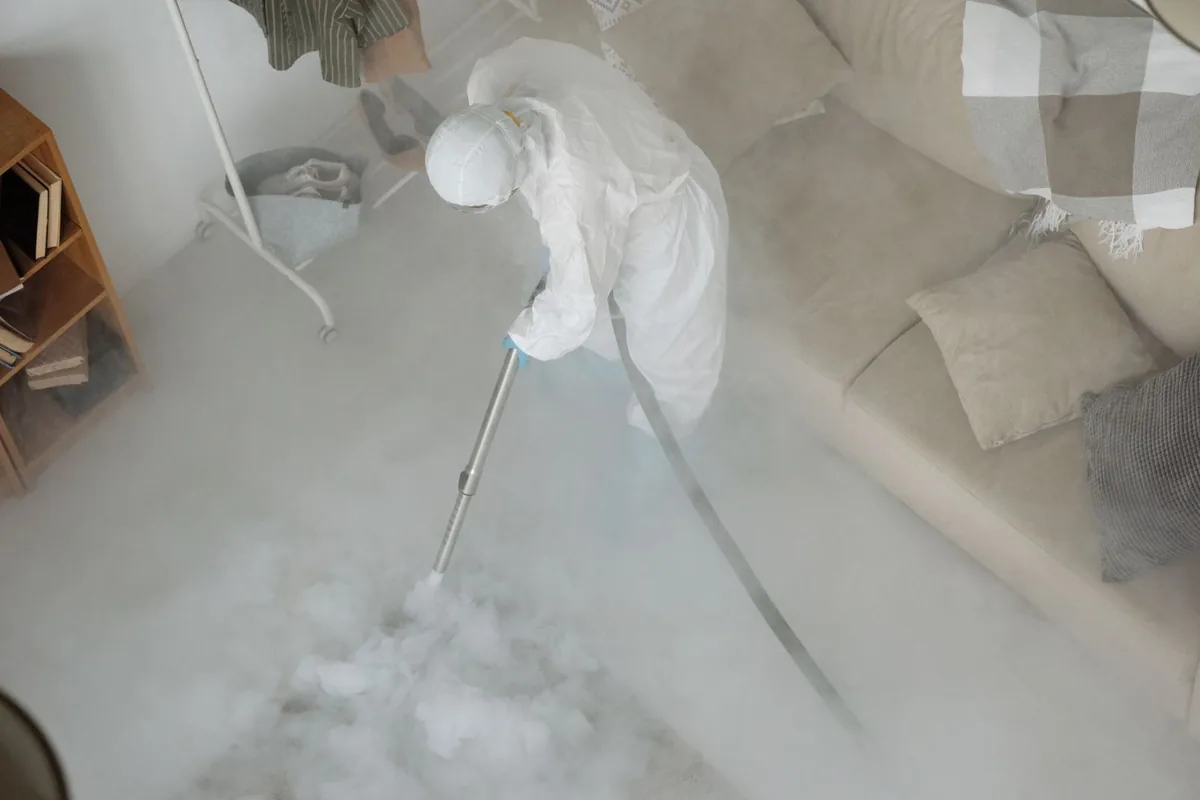
Biohazard cleaning is a specialty service for scenes that ordinary cleaners should not touch. It covers body fluids, human waste, needles, decomposition and sewage, and it ends with disinfection of the affected area.
For biohazard cleanup in O'Hare and Cook County, you get the crew, the protective equipment and the disinfectants when you call O'Hare Biohazard Cleanup Help. Families, tenants and managers get plain answers, discreet service and a safe space at the end.
About 36% of older adults in Chicago live alone, and a death at home can go unnoticed for days, which is when biohazard cleanup becomes urgent. With about 54% of households in Chicago renting, many biohazard calls come from managers who must make a unit safe for the next tenant.
The work often covers:
The crew decides how to enter, where to stage equipment and which products fit the contamination. The plan keeps the cleanup efficient and the home discreet.
Crews put on PPE, close off the affected area and keep people and pets out. Air movement is limited so germs are not carried into other rooms.
Contaminated material is removed and sealed. Every affected surface is cleaned, then disinfected with products that stay wet for the full contact time.
Odor sources are treated, not masked. The team photographs and records the work so insurers, landlords and families have what they need.
Most biohazard cleanup jobs in O'Hare, Chicago, IL cost between $1,500 and $25,000, based on published cost guides.
Insurance can offset the cost. Many homeowners and renters policies cover biohazard cleanup after a covered event, so it helps to call the insurer before work begins and keep every receipt.
| Type of job | Typical range |
|---|---|
| Most residential projects | $2,500 - $8,000 |
| Residential average range | $1,800 - $4,500 |
| Typical national range | $3,000 - $5,000 |
| Full published span | $1,500 - $25,000+ |
These ranges come from published cost guides (Fixr, Yelp Costs, Biohazard cleanup cost guide from a biohazard cleanup company) and are not a quote for O'Hare. Price drivers include type of contamination, size of the affected area, how far fluids soaked into porous materials, waste handling and disposal. For a real number, call (877) 812-4220.
The OSHA Bloodborne Pathogens Standard, 29 CFR 1910.1030, protects workers who may contact blood or other infectious material. Professional crews follow its rules on PPE, handling and waste. Employers have their own duties, and safety staff can explain them.
The crew treats the scene with care and keeps details private. Law enforcement must release the property before cleanup begins. If you or someone you know is struggling, call or text 988 any time.
A small spill on a hard floor can take a few hours. Larger scenes, soaked carpet and subfloor, or heavy odor take longer. The crew can give a better timeline after seeing the site.
Yes. Dried blood can still carry bloodborne pathogens, and scraping or sweeping it can put particles in the air. Leave it alone, keep people away and have a cleanup team treat it with protective gear.
Ask what training the crew has, how it deals with waste, whether it works with insurers and whether it can provide references. A good company explains the process in plain words. Then decide if the company is the right fit.
Biohazard cleanup is the safe removal of contaminated material and the disinfection of the affected area. Crews wear PPE, remove what cannot be cleaned and haul waste by the rules. The goal is a space that no longer poses a health risk.
One call starts the process, and you decide whether to go ahead.
Call (877) 812-4220